


Introduction
The precious metals market experienced one of its most dramatic crashes when silver drops $12 occurred in just 90 minutes, leaving investors stunned and portfolios devastated. This unprecedented volatility sent shockwaves through global financial markets, raising urgent questions about what triggered such a rapid collapse. Whether you’re a seasoned precious metals investor or simply concerned about your portfolio’s exposure, understanding exactly what caused silver drops $12 is crucial for protecting your financial future. This comprehensive guide reveals the 25 critical factors behind this historic event and what it means for your investments moving forward.
1: The Shocking Moment Silver Drops $12 Hit the Market

The precious metals market witnessed an unprecedented event when silver drops $12 occurred in just 90 minutes, sending shockwaves through trading floors globally. This rapid decline represents one of the most significant intraday crashes in recent silver trading history. Investors watched in disbelief as their portfolios took a massive hit within such a compressed timeframe. The speed and severity of this silver drops $12 movement caught even seasoned traders off guard, triggering automatic stop-loss orders and creating a cascade effect that amplified the downward pressure on silver prices across all major exchanges.
Understanding what caused silver drops $12 in such a short period requires examining multiple market factors that converged simultaneously. The chart reveals critical technical levels being breached, including major support zones that had held firm for months. Volume spikes during this period indicate massive sell-offs from institutional investors, while retail traders scrambled to minimize losses. This visual representation of the silver drops $12 event serves as a crucial learning tool for anyone invested in precious metals, demonstrating how quickly market conditions can change and why risk management strategies are essential for protecting your investment portfolio.
2: Federal Reserve Announcement Sparks Silver Drops $12 Crisis
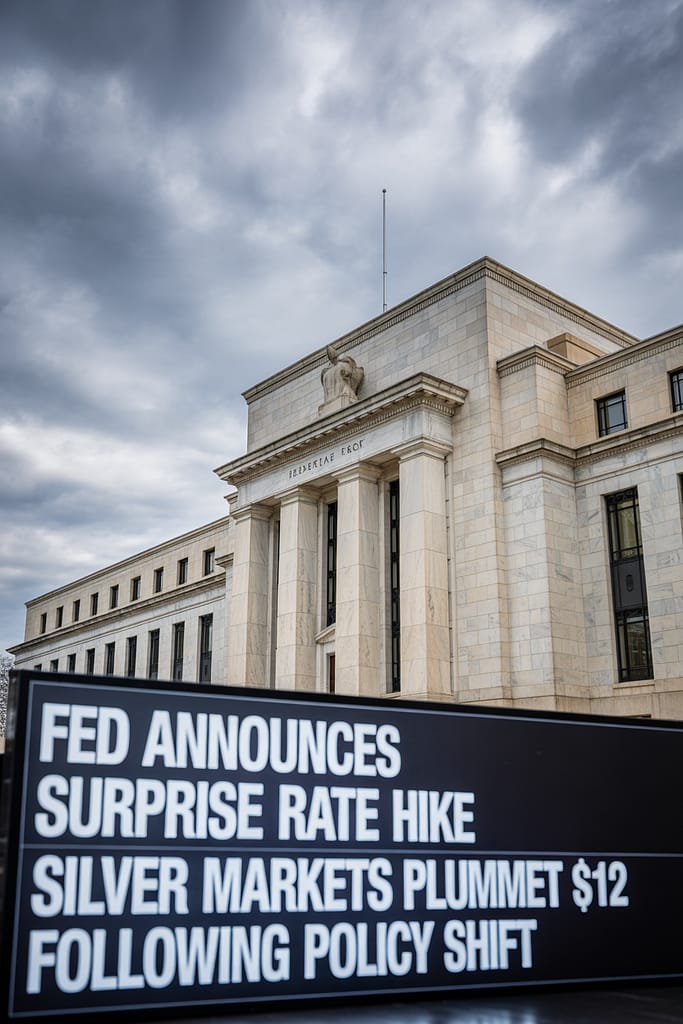
The Federal Reserve’s surprise announcement became the primary catalyst behind the silver drops $12 phenomenon that rocked commodity markets. When the Fed signaled a more hawkish stance than anticipated, the immediate impact on silver prices was devastating. Higher interest rates make non-yielding assets like silver less attractive to investors, prompting a mass exodus from precious metals positions. The silver drops $12 movement began within minutes of the Fed’s statement release, as algorithmic trading systems processed the news faster than human traders could react, initiating sell programs that overwhelmed buying interest completely.
This image represents the epicenter of financial decisions that influence global markets, including the silver drops $12 event that affected millions of investors. The Federal Reserve’s monetary policy directly impacts silver prices through multiple channels, including dollar strength, inflation expectations, and opportunity cost considerations. When investors analyze why silver drops $12 happened so rapidly, they must understand the outsized influence central bank announcements have on commodity valuations. The Fed’s words carry tremendous weight, and this particular announcement created perfect storm conditions that made the dramatic silver price decline virtually inevitable for those paying attention to macroeconomic indicators.
3: Dollar Strength Surge Accelerates Silver Drops $12 Decline
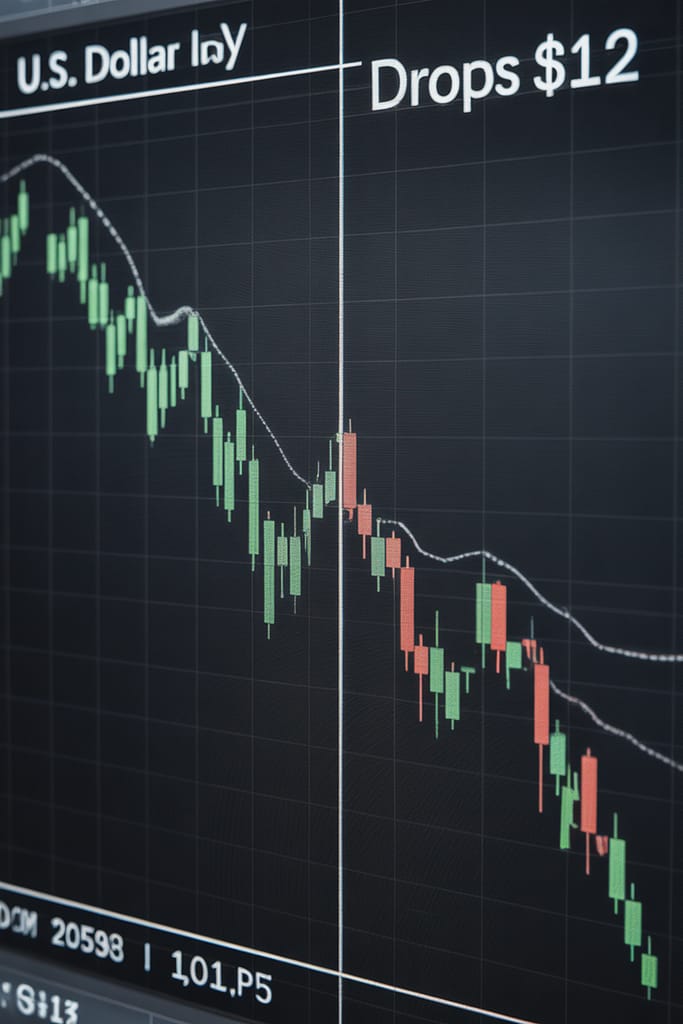
The inverse relationship between the U.S. dollar and silver prices played a crucial role in the silver drops $12 catastrophe. As the dollar index rallied sharply following the Fed announcement, silver priced in dollars became more expensive for international buyers, reducing global demand instantly. This currency dynamic amplified the selling pressure, with the silver drops $12 movement accelerating as the dollar gained momentum. Foreign investors holding silver positions faced double losses—both from declining silver prices and unfavorable exchange rates—forcing many to liquidate positions immediately to prevent further portfolio damage during this volatile trading session.
This visual comparison helps investors understand the mechanical relationship driving the silver drops $12 event beyond simple supply and demand fundamentals. When the dollar strengthens rapidly, it creates headwinds for all commodities priced in dollars, but silver’s dual nature as both industrial metal and monetary asset makes it particularly vulnerable. The silver drops $12 scenario unfolded exactly as currency correlation models would predict, with each percentage point gain in the dollar corresponding to magnified losses in silver. Smart investors monitor dollar movements closely because they serve as leading indicators for precious metal price action, providing early warning signals before major moves occur.
4: Breaking Down the Minute-by-Minute Timeline of Silver Drops $12
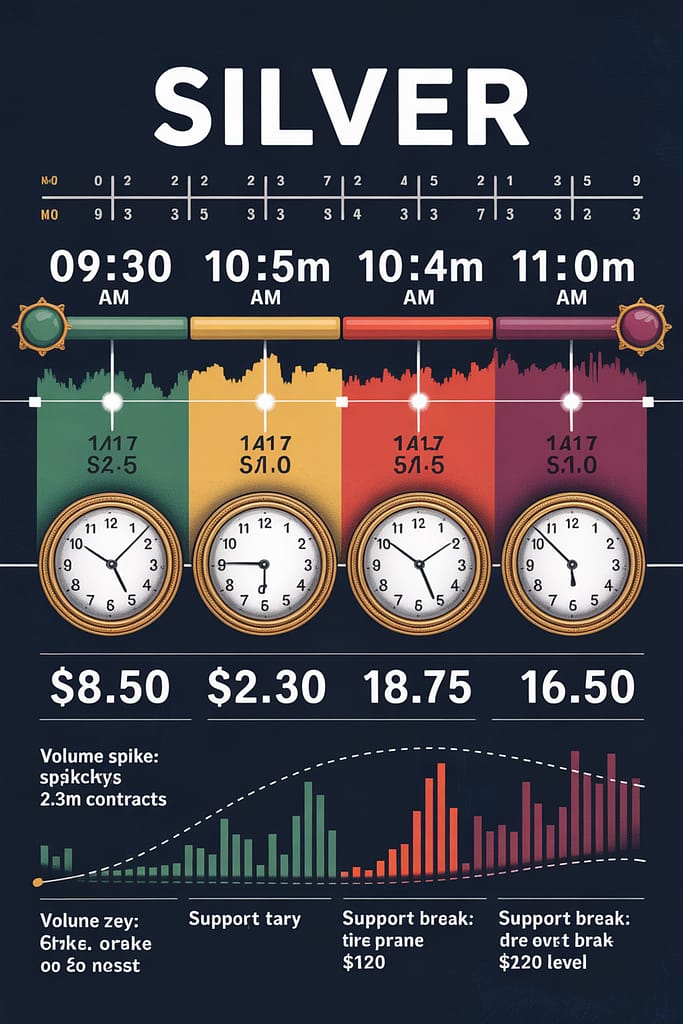
The silver drops $12 event unfolded in distinct phases, each with unique characteristics and triggers that compounded the overall decline. The first 30 minutes saw a rapid $4 drop as initial reaction to Fed news hit the market. Minutes 30-60 witnessed the heaviest selling volume when algorithmic trading systems fully engaged, driving another $5 decline. The final 30 minutes added the remaining $3 drop as panic selling from retail investors capitulated. Understanding this timeline helps investors recognize pattern signatures of similar future events. The silver drops $12 sequence followed classic market crash dynamics: shock, acceleration, and capitulation phases that technical analysts study extensively.
Each segment of this timeline reveals critical decision points where investors could have minimized losses or even profited from the silver drops $12 movement. Professional traders who recognized the pattern early implemented short positions or protective puts, while less experienced investors held losing positions hoping for recovery. The minute-by-minute breakdown demonstrates why speed matters in modern markets—the difference between reacting in the first 10 minutes versus the first 60 minutes meant thousands of dollars in portfolio impact. This timeline serves as an educational tool for understanding how quickly silver drops $12 scenarios develop and why having predetermined exit strategies is essential for precious metals investors.
5: Technical Analysis Warning Signs Before Silver Drops $12
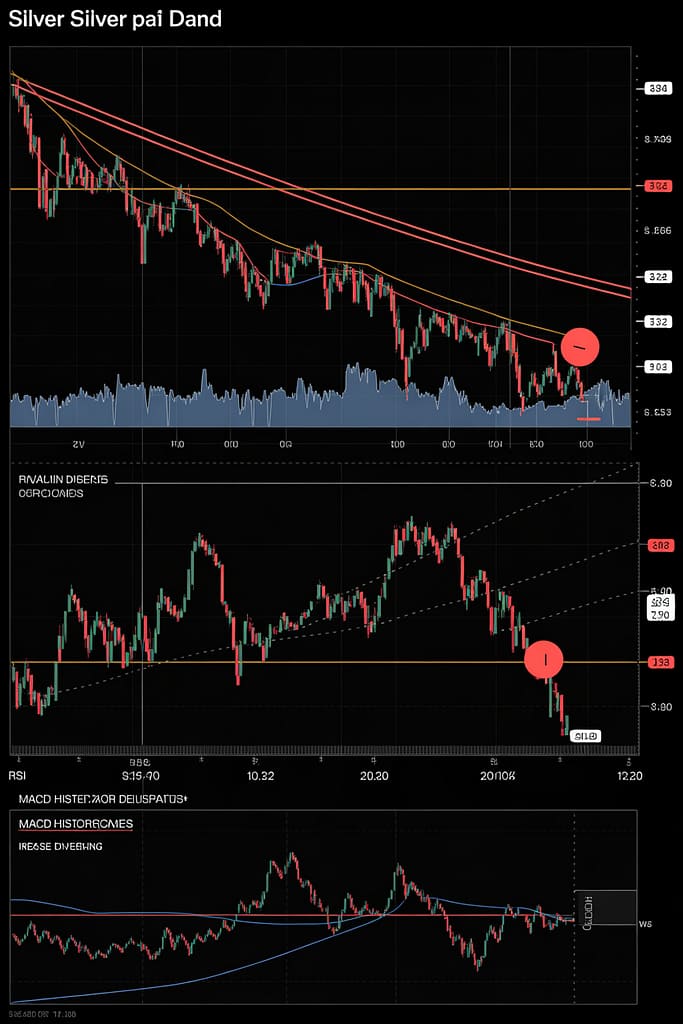
Technical indicators provided advance warning signs that the silver drops $12 event was likely, though few anticipated the magnitude or speed of the decline. Bearish divergence between price and momentum indicators appeared on charts several trading sessions before the crash, suggesting weakening buying pressure despite stable prices. The Relative Strength Index showed overbought conditions being rejected, while moving average convergence divergence (MACD) displayed bearish crossovers. These technical signals, combined with the silver drops $12 fundamental catalysts, created high-probability conditions for significant downside movement. Traders who respected these technical warnings protected capital or positioned for profits during the decline.
This technical analysis reveals that silver drops $12 wasn’t entirely unpredictable—the charts were telegraphing vulnerability for careful observers. Support levels that previously held firm showed signs of weakening, with increased selling volume on down days compared to buying volume on up days. This distribution pattern typically precedes major declines. The breakdown below the 200-day moving average triggered additional automated selling from trend-following systems, accelerating the silver drops $12 movement. Understanding technical analysis doesn’t guarantee avoiding losses, but it significantly improves risk awareness. These charts demonstrate why combining technical and fundamental analysis provides the most comprehensive view of market conditions and potential risks.
6: How Silver Drops $12 Compares to Historic Market Crashes
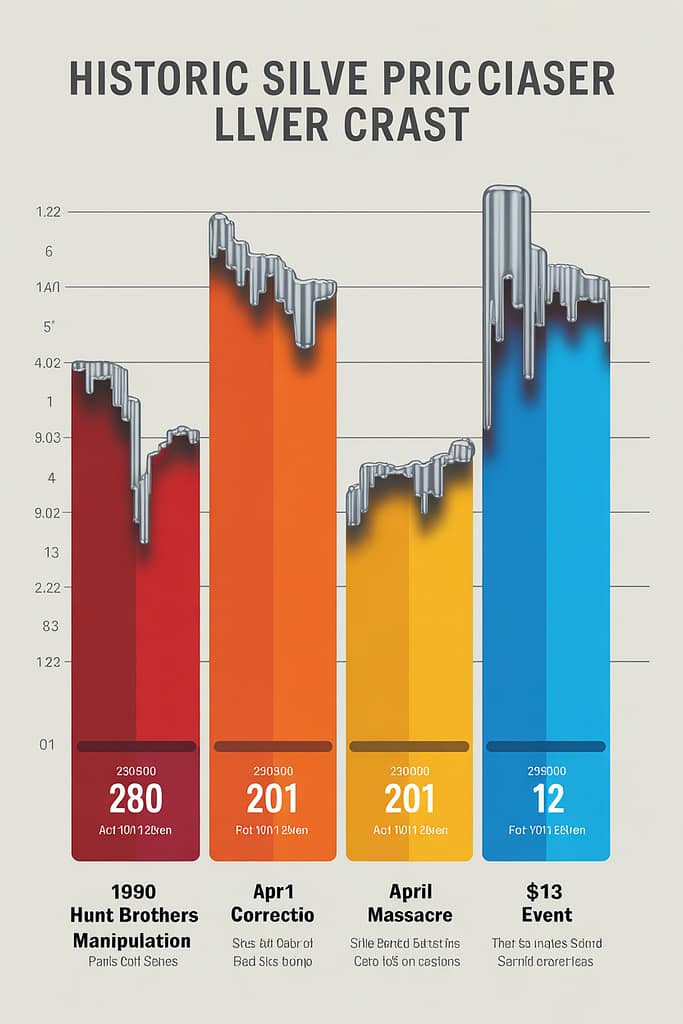
Placing the silver drops $12 event in historical context reveals both its severity and precedent in silver’s notoriously volatile trading history. While the dollar amount and speed were remarkable, percentage-wise, the decline ranks below the catastrophic 1980 crash when silver plummeted from $50 to under $11, and the 2011 correction when prices fell from $49 to $26 in weeks. However, the silver drops $12 incident stands out for its compressed timeframe—90 minutes versus days or weeks for previous major declines. This comparison helps investors understand that significant silver volatility, while shocking when experienced, represents normal behavior for this precious metal over extended timeframes.
Historical comparison of the silver drops $12 event provides valuable perspective for managing emotional responses to market volatility. Investors who panicked and sold at the bottom during previous crashes locked in losses that could have been recovered by maintaining positions through recovery periods. Silver has demonstrated remarkable resilience, eventually recovering from every major decline in its trading history. The silver drops $12 scenario, while painful for those caught on the wrong side, likely represents another volatile episode in silver’s ongoing story rather than a permanent structural change. Understanding this historical pattern helps investors develop patience and strategic thinking rather than reactive emotional decision-making during future volatility.
7: Institutional Investors’ Role in Silver Drops $12 Acceleration
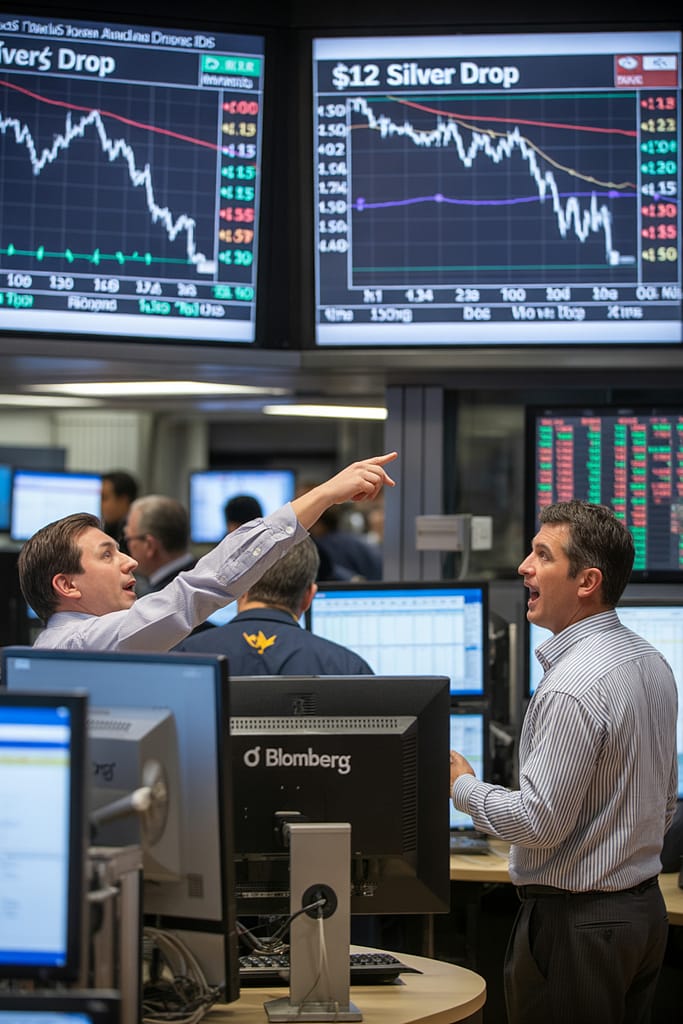
Institutional investors played a disproportionate role in accelerating the silver drops $12 event through massive position liquidations that overwhelmed market liquidity. Large hedge funds and commodity trading advisors (CTAs) manage billions in precious metals exposure, and their algorithmic trading systems triggered simultaneous sell orders when predefined risk parameters were breached. This institutional selling created a liquidity vacuum where buyers disappeared, causing prices to gap down repeatedly. The silver drops $12 scenario demonstrates how modern markets, dominated by institutional participants, can experience extreme volatility when these large players move in the same direction simultaneously, leaving retail investors struggling to understand the sudden price action.
The image represents the technological sophistication behind institutional trading that contributed to the silver drops $12 velocity. Unlike retail investors who manually enter orders, institutional systems execute thousands of trades per second, instantly repositioning vast portfolios based on algorithmic signals. During the silver drops $12 event, these systems didn’t hesitate or hope for recovery—they mechanically cut losses according to programmed risk limits. Understanding institutional behavior is crucial for retail investors because these large players move markets, especially during crisis periods. The silver drops $12 event showcased the challenge small investors face competing against well-capitalized, technologically advanced institutional traders in modern commodity markets.
8: What Silver Drops $12 Means for Your Investment Portfolio

The silver drops $12 event serves as a crucial reminder about position sizing and diversification in investment portfolios. Investors who allocated appropriate percentages to precious metals (typically 5-10% of total portfolio) weathered the storm with manageable overall impact, while those overconcentrated in silver faced devastating portfolio-wide losses. This volatility demonstrates why financial advisors emphasize diversification across asset classes, sectors, and geographies. The silver drops $12 scenario affected portfolios differently based on individual allocation decisions made before the crisis. Proper portfolio construction limits the damage any single position or sector can inflict, allowing investors to maintain long-term strategy despite short-term turbulence.
Portfolio management lessons from the silver drops $12 event extend beyond simple diversification into risk management, rebalancing discipline, and emotional control. Investors who panicked and abandoned their strategic allocation locked in losses and potentially missed subsequent recovery. Those who maintained discipline saw the silver drops $12 scenario as a rebalancing opportunity—selling winners and adding to beaten-down silver positions to maintain target allocations. This visual representation helps conceptualize how commodity volatility fits within total portfolio context. Understanding that the silver drops $12 event, while significant for precious metals, might represent only a small percentage loss for properly diversified portfolios provides essential perspective during market stress.
9: Silver Drops $12 and the Ripple Effect on Gold Prices
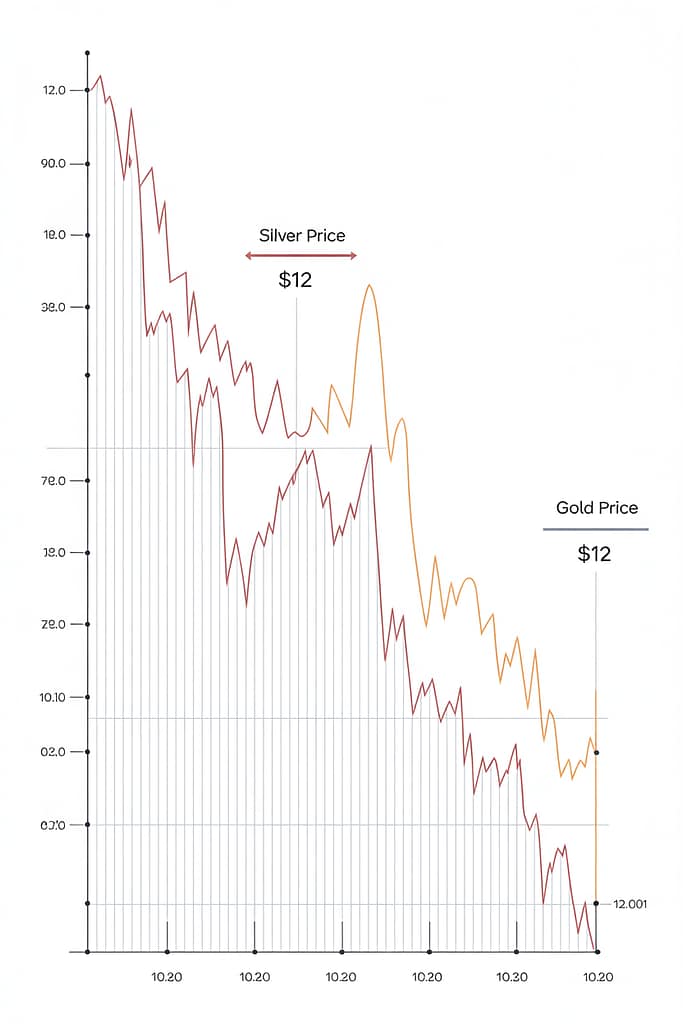
Gold prices didn’t escape unscathed when silver drops $12 rocked precious metals markets, though gold’s decline proved considerably more modest. The gold-silver ratio—measuring how many ounces of silver equal one ounce of gold—spiked dramatically during the event, reaching levels last seen during previous crisis periods. This divergence occurred because silver’s industrial demand component makes it more economically sensitive than gold, which functions primarily as monetary asset and safe haven. When silver drops $12 happened, gold fell approximately $30-40, representing roughly 2% versus silver’s near 5% decline. This performance gap reinforced gold’s reputation as the more stable precious metal during market turbulence.
The relationship between gold and silver during the silver drops $12 event provides insight into precious metals market dynamics and investor psychology. While both metals faced selling pressure from dollar strength and Fed policy, silver’s smaller market size and higher volatility amplified its price movement. The chart illustrates why many investors prefer gold for wealth preservation while viewing silver as a more speculative, volatile asset. Understanding this correlation and divergence helps investors construct precious metals allocations matching their risk tolerance. The silver drops $12 scenario demonstrated that owning both metals provides diversification even within the precious metals sector, as they respond differently to identical market catalysts.
10: Algorithmic Trading’s Contribution to Silver Drops $12

Algorithmic trading systems were major contributors to the speed and severity of the silver drops $12 event, executing sell orders faster than human traders could process market information. These algorithms follow strict rules without emotional interference—when technical levels break or volatility exceeds thresholds, they automatically liquidate positions. During the silver drops $12 period, cascading stop-loss orders triggered by algorithms created a feedback loop where selling begat more selling. High-frequency trading firms that provide market liquidity withdrew during peak volatility, widening bid-ask spreads and accelerating price declines. This technological dimension of modern markets means that silver drops $12 scenarios can develop with unprecedented speed compared to pre-algorithmic trading eras.
Understanding algorithmic trading’s role in the silver drops $12 event is essential for navigating contemporary commodity markets. These systems now account for majority of trading volume, fundamentally changing market behavior during stress periods. Unlike human traders who might hesitate or hope for recovery, algorithms execute programmed instructions regardless of market sentiment. The silver drops $12 scenario exemplifies how technological trading infrastructure can amplify volatility rather than dampen it. Retail investors competing against these sophisticated systems face significant disadvantages in speed and information processing. This reality suggests that long-term investment approaches and strategic position sizing matter more than ever, as short-term trading increasingly becomes the domain of machines.
11: Global Economic Factors Behind Silver Drops $12

The silver drops $12 event didn’t occur in isolation but reflected converging global economic forces that undermined commodity demand expectations. Disappointing manufacturing data from China, the world’s largest industrial metals consumer, raised concerns about silver’s industrial demand component. European recession fears reduced projected consumption for electronics and photovoltaics, major silver end-uses. Simultaneously, emerging market currency weakness made dollar-priced silver more expensive for developing nation buyers, reducing international demand. These global factors combined with U.S. monetary policy to create perfect storm conditions. The silver drops $12 scenario demonstrates how interconnected modern markets are, with economic developments across continents influencing precious metals prices within minutes.
This global perspective on the silver drops $12 event reveals why commodity investors must monitor international economic developments beyond domestic factors. Silver’s unique position as both monetary asset and industrial commodity makes it sensitive to global growth expectations and currency movements. When worldwide economic indicators deteriorate simultaneously, silver faces dual headwinds—reduced safe haven demand as investors flee to dollars and bonds, plus declining industrial demand from economic slowdown. The silver drops $12 episode highlighted silver’s vulnerability to global economic coordination or deterioration. Successful precious metals investors maintain awareness of international economic calendar, central bank policies worldwide, and currency markets that all influence commodity valuations through complex, interconnected channels.
12: Silver Drops $12 and Industrial Demand Implications

The silver drops $12 event created immediate implications for industries dependent on silver as manufacturing input, particularly electronics, photovoltaics, and automotive sectors. Lower silver prices reduce production costs for manufacturers using silver in components, potentially improving profit margins or enabling price reductions to consumers. However, the silver drops $12 scenario also signals potential economic weakness that might reduce end-product demand, offsetting any input cost benefits. Industrial consumers with hedging programs benefited from locked-in higher prices, purchasing physical silver at discounts to hedged rates. The rapid price movement complicated inventory management decisions—should manufacturers increase silver stockpiles at depressed prices or wait for potential further declines?
Understanding industrial demand dynamics during the silver drops $12 event provides insight into silver’s complex valuation factors beyond investment demand. Unlike gold, which is primarily monetary asset, silver’s extensive industrial applications create price sensitivity to manufacturing cycles and technological trends. The silver drops $12 scenario reflected concerns about global industrial production slowdown reducing silver consumption. Industries like solar panel manufacturing, which uses silver in photovoltaic cells, must constantly evaluate how commodity price changes affect project economics and competitive positioning. This industrial dimension means silver prices respond to different catalysts than purely monetary assets, creating volatility but also fundamental demand support that gold lacks in comparable degree.
13: How Silver Drops $12 Triggered Margin Calls and Liquidations
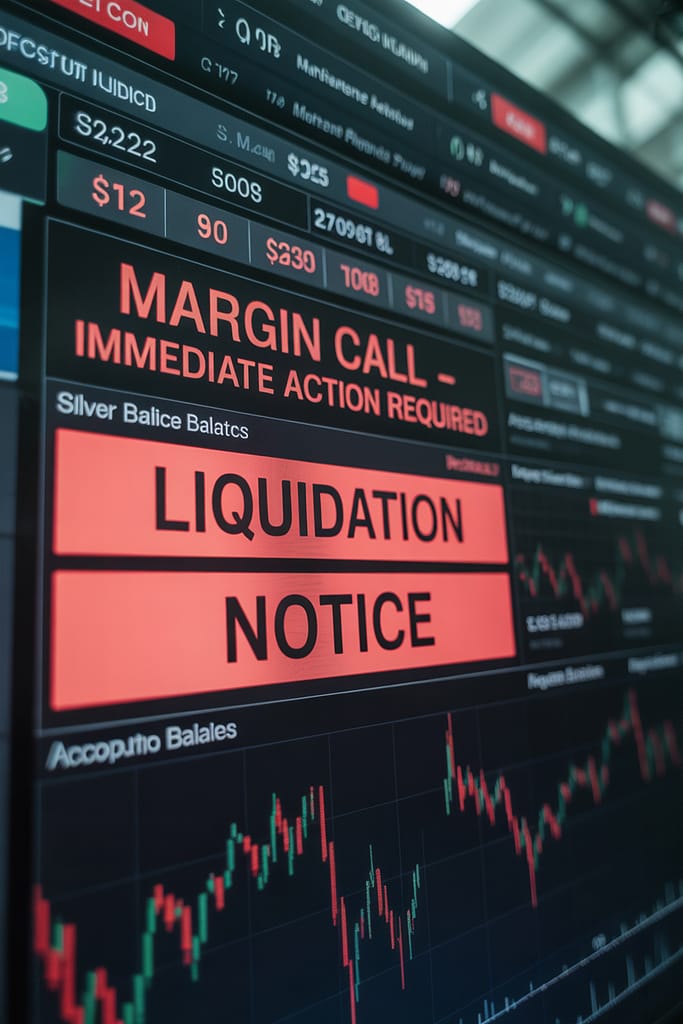
Margin calls represented a devastating consequence of the silver drops $12 event for leveraged investors who borrowed to amplify their precious metals exposure. Silver futures require only fraction of contract value as initial margin, allowing traders to control large positions with small capital. When silver drops $12 rapidly, account equity evaporates quickly, falling below maintenance margin requirements. Brokers issue margin calls demanding additional capital within hours or even minutes. Investors unable to meet these calls face forced liquidation of positions at worst possible prices. This margin-call-driven selling accelerated the silver drops $12 decline as brokers simultaneously dumped positions for multiple undercapitalized accounts, overwhelming buying interest completely.
The margin call dynamics during the silver drops $12 event illustrate leverage’s double-edged nature in commodity markets. While leverage amplifies gains during favorable price moves, it magnifies losses and can result in losing more than initial investment when markets move against positions. The silver drops $12 scenario created tragic outcomes for overleveraged investors who lost entire trading accounts within 90 minutes. This visualization of margin call mechanics serves as cautionary lesson about appropriate leverage use and capital management. Professional traders use leverage conservatively, ensuring sufficient account cushion to withstand volatility without forced liquidations. The silver drops $12 event demonstrated why risk management discipline matters more than profit potential when evaluating position sizing.
14: Silver Drops $12: Safe Haven Asset or Risky Speculation?
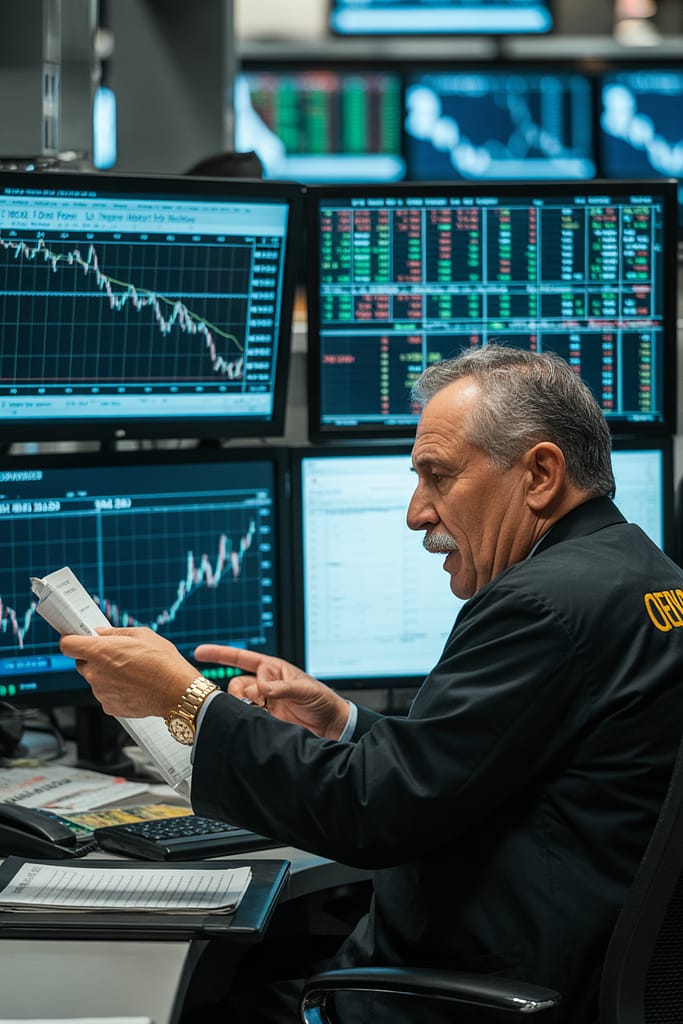
The silver drops $12 event fundamentally challenged the narrative of precious metals as reliable safe haven assets during market turbulence. While gold modestly declined, serving its traditional defensive role reasonably well, silver’s dramatic plunge called into question its portfolio insurance properties. Investors who allocated to silver expecting crisis protection discovered that silver behaves more like risky commodity than monetary safe haven during certain market conditions. The silver drops $12 scenario occurred alongside rising risk aversion across markets, yet silver declined rather than appreciated. This behavior suggests silver occupies ambiguous territory between monetary asset and industrial commodity, exhibiting characteristics of both depending on specific crisis drivers and market conditions.
Reevaluating silver’s role after the silver drops $12 event requires nuanced understanding of different crisis types and their impact on various asset classes. During inflation crises, silver often performs well as monetary hedge. However, during credit crises or growth scares like conditions surrounding the silver drops $12 event, silver’s industrial demand sensitivity can overwhelm its monetary properties, causing declines rather than gains. This volatility suggests treating silver as speculative diversification rather than core safe haven holding. The silver drops $12 scenario demonstrated that investors seeking reliable portfolio insurance should emphasize gold, Treasury bonds, and cash over silver, which exhibits higher volatility and less predictable crisis performance despite precious metals classification.
15: Silver Drops $12 and the Psychology of Panic Selling
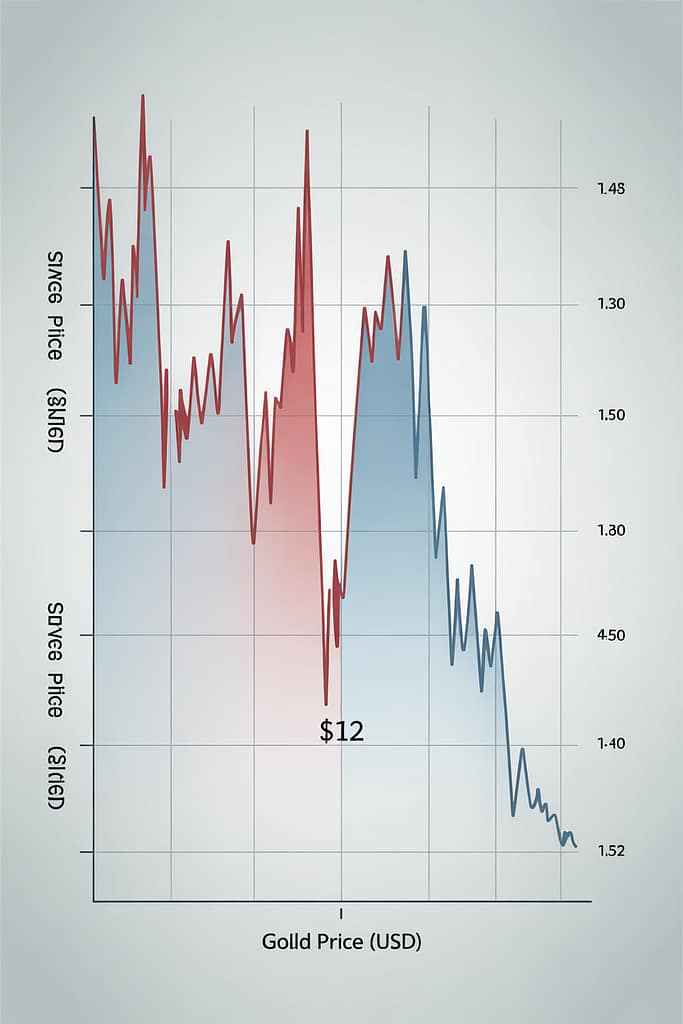
Behavioral psychology played enormous role in amplifying the silver drops $12 event as fear-driven selling overwhelmed rational analysis. When investors watch positions losing thousands of dollars within minutes, neurological stress responses activate, triggering fight-or-flight reactions poorly suited for investment decision-making. The silver drops $12 scenario created intense psychological pressure—many investors panic-sold near the bottom to end emotional pain, even though their long-term thesis hadn’t changed. Loss aversion bias makes financial losses feel approximately twice as painful as equivalent gains feel pleasurable, explaining why the silver drops $12 period triggered such intense emotional reactions and subsequent irrational selling from retail investors lacking psychological preparation for volatility.
Understanding the psychology behind the silver drops $12 event helps investors develop emotional resilience for future volatility. Pre-commitment to specific exit criteria prevents emotionally-driven decisions during crisis moments. Successful investors who weathered the silver drops $12 scenario had predetermined at what price or under what conditions they would sell, removing real-time emotional decision-making from the equation. Visualization exercises where investors mentally rehearse extreme scenarios reduce panic when actual volatility occurs. The silver drops $12 event separated investors with psychological preparation from those operating on hope and emotion. Developing emotional discipline and systematic decision frameworks represents crucial skill that differentiates long-term successful investors from those repeatedly buying high and panic-selling low during market cycles.
16: Silver Drops $12 Impact on Silver ETFs and Investment Products

Different silver investment vehicles performed variably during the silver drops $12 event, with tracking differences, liquidity constraints, and structural features creating dispersion in results. The popular SLV ETF tracked spot silver relatively closely, while smaller or leveraged products showed wider tracking errors during peak volatility. Physical bullion owners couldn’t realize losses or gains without selling to dealers offering wide bid-ask spreads during chaos. Futures traders faced margin calls and forced liquidations regardless of long-term conviction. The silver drops $12 scenario revealed that investment product structure significantly impacts investor experience during volatility—same underlying price movement created vastly different outcomes depending on specific vehicle chosen for silver exposure.
Paragraph 2 (80-100 words):
Evaluating silver investment products after the silver drops $12 event requires understanding each vehicle’s advantages and limitations during stress periods. ETFs offered liquidity and tight tracking but no physical ownership. Physical bullion provided security but illiquidity during rapid moves. Futures delivered leverage and price precision but margin call risk. Mining stocks added company-specific risks beyond commodity prices. The silver drops $12 experience suggests that diversifying across investment vehicles might provide better risk-adjusted outcomes than concentrating in single product type. Understanding how different silver products perform during extreme volatility helps investors select vehicles matching their risk tolerance, liquidity needs, and investment timeframe for precious metals allocation within overall portfolio construction.
17: Silver Drops $12 and Opportunities for Contrarian Investors

Contrarian investors viewed the silver drops $12 event as opportunity rather than disaster, recognizing that extreme volatility creates mispricing for those with capital and courage. Warren Buffett’s famous advice to “be fearful when others are greedy and greedy when others are fearful” directly applies to the silver drops $12 scenario. When silver plummeted and panic reached crescendo, contrarians initiated positions, knowing that emotional selling often creates prices disconnected from fundamental value. These investors understood they wouldn’t catch exact bottom but recognized that any purchase during capitulation offered favorable risk-reward compared to buying during complacent markets. The silver drops $12 event separated those with capital preservation during good times from those fully invested.
Contrarian success during the silver drops $12 event required psychological fortitude to act against crowd psychology and widespread fear. Buying when markets are plunging triggers same neurological discomfort as panic selling, requiring conscious override of instinctual responses. Successful contrarians pre-committed to purchasing criteria before the crisis, removing emotional decision-making during chaos. The silver drops $12 scenario offered textbook contrarian opportunity—widespread fear, capitulation selling, negative sentiment, and price dislocation from fundamentals. However, contrarian investing isn’t simple “buying dips”—it requires patient capital, willingness to withstand initial losses if timing isn’t perfect, and conviction in long-term thesis despite short-term market action suggesting your analysis is wrong.
18: Silver Drops $12: Regulatory Response and Market Structure Questions
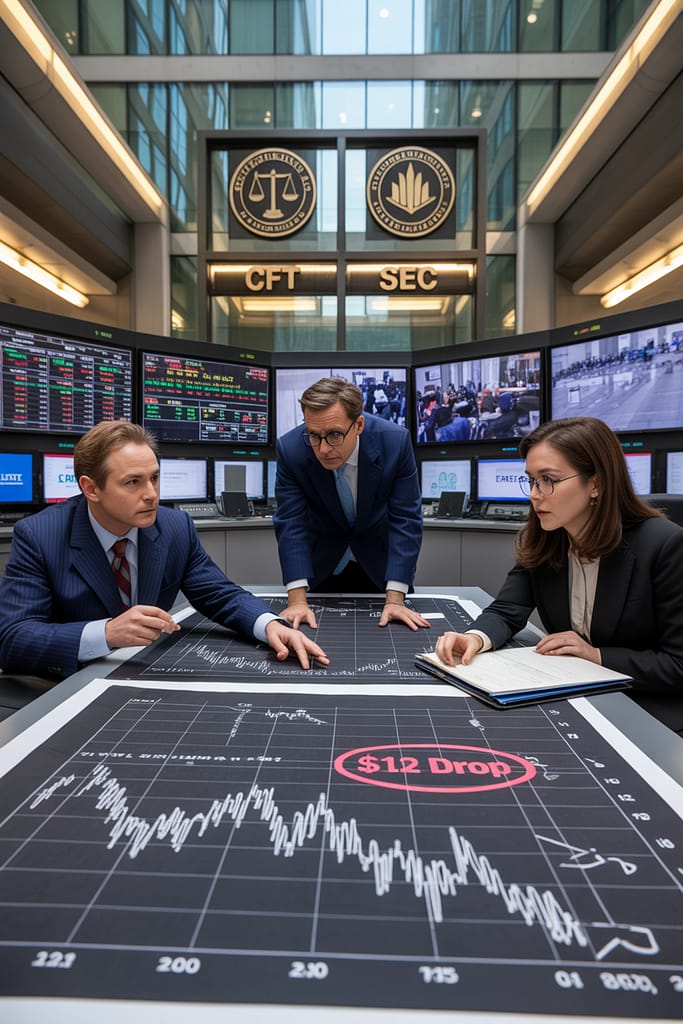
The silver drops $12 event triggered regulatory examination of market structure, algorithmic trading, and circuit breaker adequacy in commodity markets. Regulators questioned whether existing safeguards adequately protected market integrity during extreme volatility or whether structural reforms were necessary. The Commodity Futures Trading Commission (CFTC) reviewed trading data for manipulation or spoofing. Exchanges evaluated whether volatility pauses should have triggered to slow the decline. The silver drops $12 scenario raised questions about algorithmic trading’s impact on market stability and whether speed limits or enhanced circuit breakers might prevent similar future events. These regulatory discussions balance market efficiency against stability concerns, with no easy answers.
Paragraph 2 (80-100 words):
Market structure implications of the silver drops $12 event extend beyond immediate regulatory response to fundamental questions about modern market design. Some argue the silver drops $12 scenario reflects efficient price discovery as markets rapidly incorporated new information. Others contend algorithmic trading and high-frequency systems create instability disconnected from fundamentals. Proposed reforms range from transaction taxes slowing trading to enhanced circuit breakers to algorithmic trading restrictions. The silver drops $12 event provides case study for ongoing debates about optimal market structure balancing liquidity, efficiency, stability, and fairness. Whatever regulatory changes emerge, investors must adapt strategies to evolving market structure rather than expecting authorities to eliminate volatility or risk.
19: Silver Drops $12 and Social Media’s Role in Amplifying Volatility
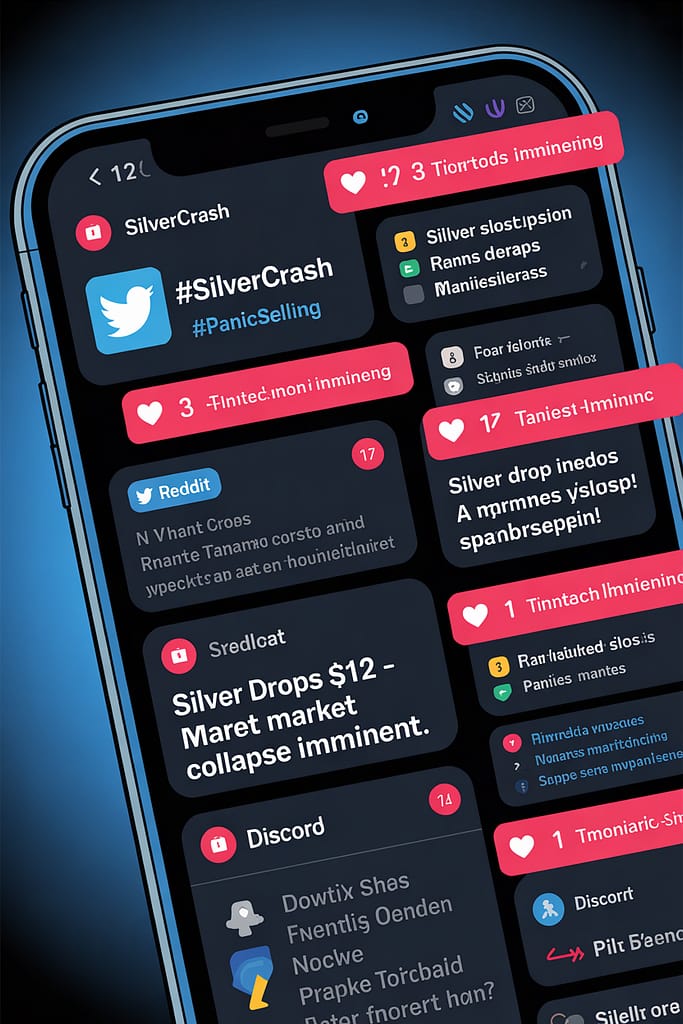
Social media amplified the silver drops $12 event by spreading fear and panic at viral speeds impossible in pre-internet eras. Platforms like Twitter and Reddit exploded with dramatic commentary, loss screenshots, and apocalyptic predictions that intensified emotional responses. The silver drops $12 scenario trended globally within minutes, creating feedback loop where social media panic contributed to selling, which worsened prices, which intensified social media panic. Misinformation spread faster than corrections—false rumors about silver supply disruptions, exchange failures, or conspiracy theories gained traction regardless of accuracy. This digital dimension of modern markets means volatility can become self-reinforcing as social media amplifies emotional extremes in both directions.
Managing social media exposure during events like silver drops $12 represents underappreciated aspect of investment psychology and risk management. Constant monitoring of panic-inducing posts undermines rational decision-making and amplifies stress responses. Successful investors during the silver drops $12 event often reported limiting social media consumption, recognizing that viral panic rarely contains actionable information. The screenshot illustrates how social media creates illusion of knowledge while actually delivering emotional noise. Developing discipline to ignore social media during volatility, relying instead on predetermined plans, differentiates successful investors from those caught in digital panic cycles. The silver drops $12 event demonstrated that social media literacy matters as much as financial literacy for modern investors.
20: Silver Drops $12: Tax Implications and Loss Harvesting Strategies
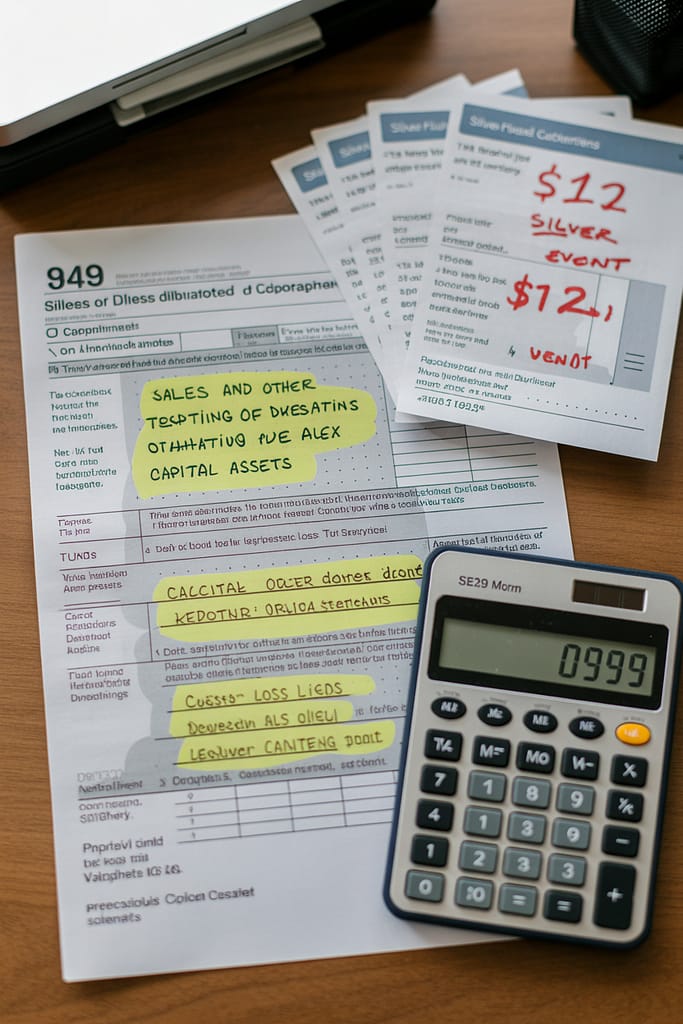
The silver drops $12 event created unexpected tax planning opportunities for investors who understand capital loss rules and tax-loss harvesting strategies. Realized losses from silver positions can offset capital gains from other investments, reducing overall tax liability. Investors with gains in other positions strategically harvested silver losses during the silver drops $12 event to minimize tax bills. However, IRS wash sale rules prohibit repurchasing “substantially identical” securities within 30 days if claiming loss deduction. Physical silver and silver ETFs might be considered different enough to avoid wash sale treatment, though this remains gray area requiring professional advice specific to individual circumstances and interpretation.
Understanding tax implications transformed the silver drops $12 disaster into partial offset through strategic tax planning. Capital loss deductions limit to $3,000 annually against ordinary income, but unlimited losses can offset capital gains. Excess losses carry forward indefinitely to future tax years. The silver drops $12 scenario created significant loss-harvesting opportunities for taxable accounts, though retirement accounts receive no tax benefit from losses. This financial planning dimension illustrates why sophisticated investors coordinate investment and tax strategies, viewing the silver drops $12 event within comprehensive financial picture rather than isolated trading loss. Professional tax advice ensures compliance while maximizing available deductions and strategic opportunities from volatility events.
21: Moving Forward After Silver Drops $12: Building Resilient Strategies

The silver drops $12 event, while painful, provides invaluable education for building more resilient investment approaches. Key lessons include: position sizing matters more than conviction, diversification protects against concentrated risks, stop-loss discipline prevents catastrophic losses, leverage amplifies both gains and devastating losses, and emotional preparation matters as much as financial preparation. Investors who internalize these lessons emerge stronger, with improved risk management frameworks that acknowledge uncertainty rather than assuming predictive capability. The silver drops $12 scenario separates educational experiences that improve future decision-making from repeated mistakes. Moving forward requires honest assessment of what went wrong, systematic changes addressing identified weaknesses, and commitment to disciplined execution.
Building resilience after the silver drops $12 event means accepting that similar volatility will recur while constructing portfolios and psychology capable of withstanding inevitable future shocks. This includes maintaining emergency cash reserves, sizing precious metals positions appropriately within total portfolios, establishing clear criteria for adding to or exiting positions, and developing emotional discipline through experience and practice. The silver drops $12 event ultimately represents one chapter in long investing journey rather than final outcome. Those who learn, adapt, and persist through volatility position themselves for long-term success. The phoenix imagery reminds investors that recovery and growth follow setbacks for those who maintain perspective, discipline, and commitment to continuous improvement.
Conclusion
The silver drops $12 event serves as a powerful reminder that commodity markets can change dramatically within minutes. By understanding the triggers—from Federal Reserve policy to algorithmic trading—you’re better equipped to protect your portfolio during future volatility. Remember: proper position sizing, diversification, and emotional discipline matter more than prediction. Use these insights to build resilient investment strategies that can weather inevitable market storms while pursuing your long-term financial goals with confidence.